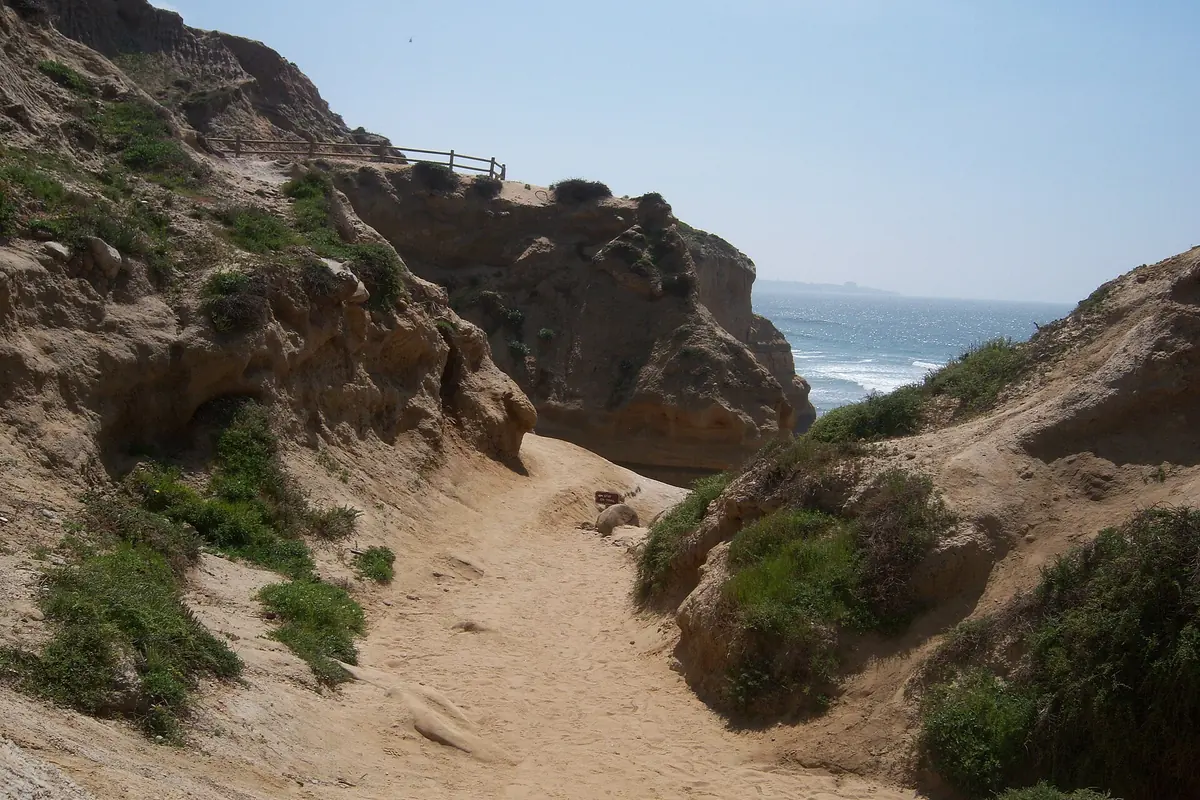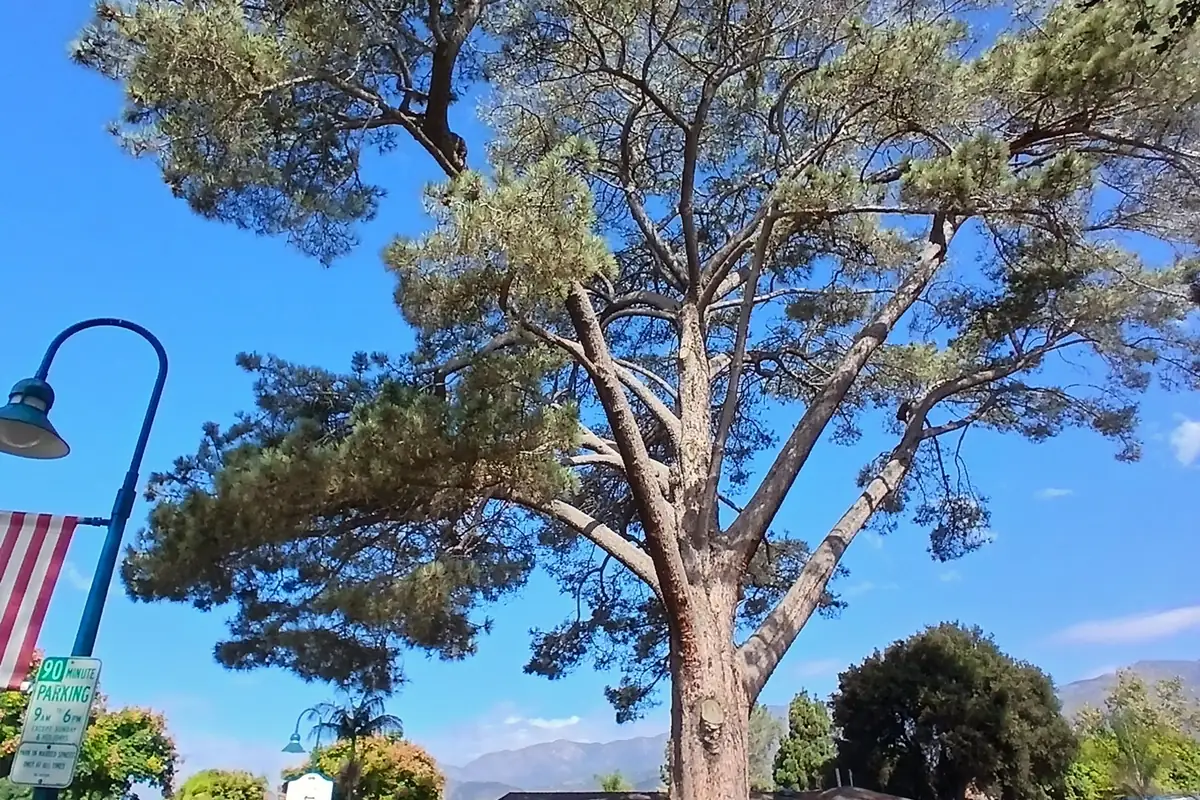
The Wardholme Torrey Pine is a landmark tree in Carpinteria, in Santa Barbara County, well outside San Diego. Its connection to this coastal guide is botanical: Torrey pines are closely associated with the protected landscape near La Jolla, but this particular tree was planted farther north. If you are looking for a San Diego hike among wild Torrey pines, choose the reserve instead. If you are visiting Carpinteria, the Wardholme tree is a compact natural-history stop.
Where to find the Wardholme Torrey Pine
Explore Carpinteria's natural-heritage guide lists the tree at 5160 Carpinteria Avenue and identifies it as Carpinteria Historical Landmark Number 1. Use that exact landmark name and address when planning. A broad search for Torrey pine can send you to a nature reserve hundreds of miles away, while a loose phrase such as wayward pine tree is not the proper name of this site.
Treat the setting as a streetside landmark visit, not a public arboretum with unrestricted grounds. Remain in legal public viewing areas, observe any signs and respect neighboring entrances. This guide does not promise access beneath the canopy, visitor parking, opening hours or a staffed interpretive program. Those details should not be invented from the tree's fame.
Its documented planting story
The local natural-heritage account says the tree began as a seedling collected on Santa Rosa Island in 1888 and was planted by Judge Ward at his home, Wardholme. That makes it a planted landmark with an island connection, rather than evidence that wild Torrey pine forests once occupied this exact Carpinteria street.
Historical accounts help explain why this individual tree matters, but they should be kept distinct from current measurements. A height recorded at a centennial celebration is not the tree's verified height today. Trees grow, lose branches and respond to changing conditions. This guide does not assign a current size or repeat a world-record claim as if a new survey had confirmed it.
State recognition
The California Office of Historic Preservation has a listed-resource record for the Wardholme Torrey Pine, with a registration date of August 15, 1968. The official record is a useful source for the landmark's recognition. Do not confuse that registration date with its planting date or assume it establishes every detail of a local story.
When writing a caption or sharing a photograph, keep those distinctions visible: planted in the nineteenth century according to local heritage information; recognized in the state record in 1968; photographed on your actual visit date. Clear captions make historical places easier to understand and prevent old measurements from being passed around as current facts.
Why Torrey pines are unusual
The local heritage guide identifies the species' two natural locations as the coast near La Jolla and Santa Rosa Island in the Santa Barbara Channel. The Wardholme story connects those two geographic worlds through a transplanted seedling. A cultivated specimen outside that range is different from a naturally occurring population, even when the individual becomes conspicuous and locally important.
For a comparison grounded in habitat rather than horticulture, explore our Torrey Pines State Natural Reserve guide. Check the reserve's current closure notices before planning a trip. The landmark tree and the reserve should not be squeezed into the same casual outing simply because they share a species name.
How to look without damaging a living landmark
Stand back far enough to see the overall branching form, then examine visible details with your eyes or a camera lens. Avoid climbing, pulling branches, removing cones or collecting bark. A large tree can be both robust-looking and vulnerable to damage around its roots. Do not cross a barrier or compact planted ground to obtain an unobstructed trunk photograph.
If the view includes cars, buildings or utility infrastructure, include them honestly or change your position within the legal public area. They show the urban setting in which the tree has persisted. There is no need to create the impression of a remote forest or imply access that a visitor does not have.
Make it part of a Carpinteria stop
The Wardholme tree makes most sense within an existing Carpinteria itinerary. Plan other stops through local visitor information rather than assuming a dedicated facility, restroom or picnic area at the tree. Bring a simple field-note question: how does the canopy occupy the street scene, and what is visible from the public viewpoint?
Use the outside San Diego guide for the geographical context of this detour. The useful takeaway is not that one famous tree replaces a habitat visit. It is that a planted individual can carry a well-documented human history, while the species' wild populations tell a separate conservation story.
Sources & further reading
Official information and references for this guide. Check the source for current access, rules and conditions.