The Shelter Island playground makes Shoreline Park a useful choice for families who want play equipment and a waterfront walk in the same outing. The Port of San Diego lists a sand beach, picnic tables, restrooms, public art and a fishing pier along this bayside park. Think of it as a San Diego Bay park visit, not a substitute for a lifeguarded ocean swimming beach.
Where is Shelter Island Shoreline Park?
The Port lists the park at 2200 Shelter Island Drive in San Diego’s Point Loma area. Shoreline Park follows the bayside length of Shelter Island, with open views across San Diego Bay. Its linear layout means that your choice of starting point affects how much walking you do before reaching the part of the park that matters to your group.
Use the Port’s Shoreline Park page as your planning reference. A general Shelter Island map pin may lead to a hotel, marina entrance or boat facility rather than the playground. Identify public parking and the park frontage before you unload a stroller, picnic supplies or fishing gear.
Finding the Shelter Island playground
The park’s official amenity list includes play equipment, and the Port’s parks FAQ identifies Shelter Island Park South among its playground locations. That is a better starting point than assuming that every grassy stretch along the waterfront has equipment. If the playground is the main reason for coming, orient the visit around the southern park area and check the Port’s map and on-site signs.
Inspect the play area when you arrive. Equipment availability and maintenance can change, and an online amenity list is not a daily inspection report. Let the children play before committing to a long waterfront walk, then decide how far the group wants to go. Keep a supervising adult close; the surrounding park includes water, roads and other users as well as the play space.
Walking Shoreline Park
The Port describes this as a mile-long scenic park along the bay. You do not need to walk its full length to have a worthwhile visit. Pick a comfortable turnaround point and remember that an out-and-back doubles the distance you cover. A family with a stroller or a tired preschooler may prefer a short section near the playground and picnic area.
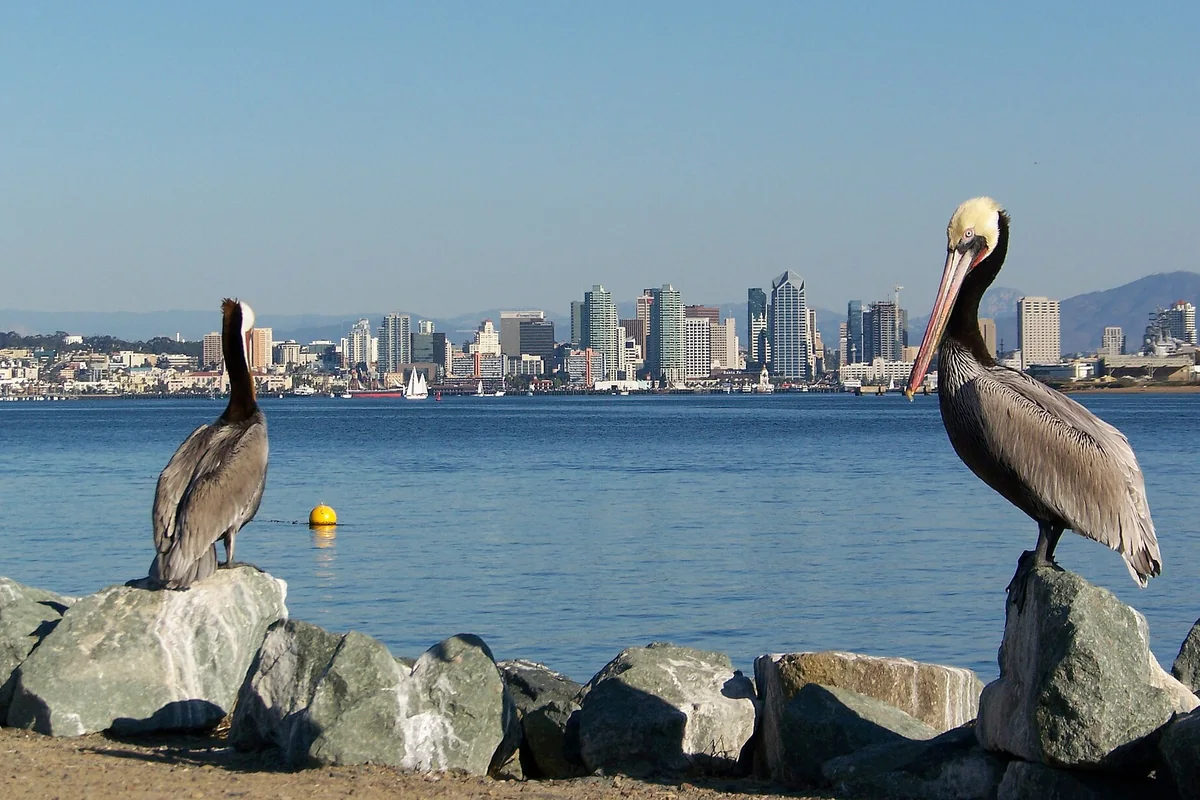
Follow the public waterfront route and be alert where bikes, pedestrians and facility access meet. Let faster users pass, keep bags out of the route and pause at a wider spot for photographs. The appeal here is the changing bay view: boats, the skyline and activity on the water. There is no need to step into a marina, cross a launch area or climb on shoreline structures to improve it.
Shelter Island beach: bay water, not an ocean break
Shoreline Park has a sand beach. The Port’s parks FAQ says swimming is allowed at its Shelter Island Central beach, but there are no lifeguards on duty. This is an important distinction for anyone looking for a “Shelter Island beach San Diego” family destination. A calm-looking bay surface is not the same as a supervised swimming area.
Check current county water-quality information before entering the water and supervise children continuously near the shore. If a staffed swimming beach is the priority, compare the family-beach guide instead. Boats, changing depth and the absence of breaking ocean waves can give a misleading impression of simplicity. Do not let the playground outing turn into an unplanned swim without reassessing the setting.
Fishing pier and boat watching
The public fishing pier is one of the park’s listed amenities. It gives the walk an obvious destination, especially for children who enjoy seeing boats and fishing activity. Keep small children beside an adult and away from hooks, bait and unattended tackle. Give anglers room to cast, and do not lean over railings to follow something in the water.
The Port’s FAQ identifies Shelter Island Central as a public fishing-pier location and notes its fishing-license exemption. All other applicable rules still matter, including species restrictions and limits. Consult CDFW’s current ocean fishing regulations before fishing. The pier is not a launch point for an improvised swim, and marina docks should not be treated as public sightseeing extensions.
Picnic tables, fire rings and restrooms
The Port lists picnic tables, drinking fountains, arbors, restrooms and fire rings among the park amenities. Those facilities make a picnic a sensible addition to a short walk, but availability at the exact spot you choose is not guaranteed. Bring water, pack out your trash and keep loose food wrappers secure in the bay breeze.
If a fire ring is central to your plan, check the Port’s current rules before bringing fuel. An amenity appearing on a park page does not promise that a ring is available, that fires are permitted under every condition or that a large gathering needs no authorization. A simple picnic is easier to adapt than an outing that depends on securing one particular facility at a busy time.
Parking and park hours
The official Shoreline Park page lists both free and paid parking options and explains that Port-managed meters have designated paid hours. Check the signs at the actual space you choose, including time limits and special restrictions. Do not assume a nearby hotel or marina lot is public park parking.
Use the Port’s page for current park hours and parking details before an early-morning or evening trip. Budget for the walk between the car and your chosen park segment. Carrying less can make the visit easier, especially if the nearest convenient spaces are occupied. Keep launch-ramp circulation and accessible spaces clear, and never use a loading zone as a way to avoid a parking decision.
Is the shoreline walk accessible?
The park has paths and public amenities, but the source information used for this guide does not establish the dimensions, slopes or current condition of every route and facility. Do not assume that a paved-looking line on a map answers a specific wheelchair, walker or stroller question. Contact the Port if a particular route or restroom feature is essential.
For a low-effort visit, select a short stretch near the parking you actually obtain and confirm the path before unloading everything. Sand and the beach edge are different surfaces from the park route. A group member can enjoy the bay from the park without going onto the sand. Build the outing around the usable route, not around a requirement to reach every listed feature.
A relaxed family itinerary
Start at the playground, check the restrooms and establish a meeting point. After playtime, take a short waterfront walk with a turnaround that everyone can manage. Add a pier look if the route and children’s attention allow it, then settle into a picnic rather than stretching the walk until the return becomes a chore.
For a different view of the bay on another day, consider San Diego harbor tours. If you are comparing park visits rather than boat trips, browse the coastal parks guide. Shoreline Park works best when you treat the playground, bay view and short walk as the main event, with additional activities optional rather than compulsory.
Public art and a slower walking pace
Public art is another amenity listed by the Port, making the park useful even when the group is not interested in swimming or fishing. Let a short walk include stops rather than measuring success by distance. Keep children with the group while looking at an installation, and avoid climbing or sitting on artworks unless the site explicitly permits it.
Questions before you go
Does Shelter Island have a playground?
Yes. The Port lists play equipment at Shoreline Park and identifies Shelter Island Park South in its playground FAQ.
Is Shelter Island a lifeguarded swimming beach?
No. The Port says swimming is allowed at Shelter Island Central, but no lifeguards are on duty.
Sources & further reading
Official information and references for this guide. Check the source for current access, rules and conditions.