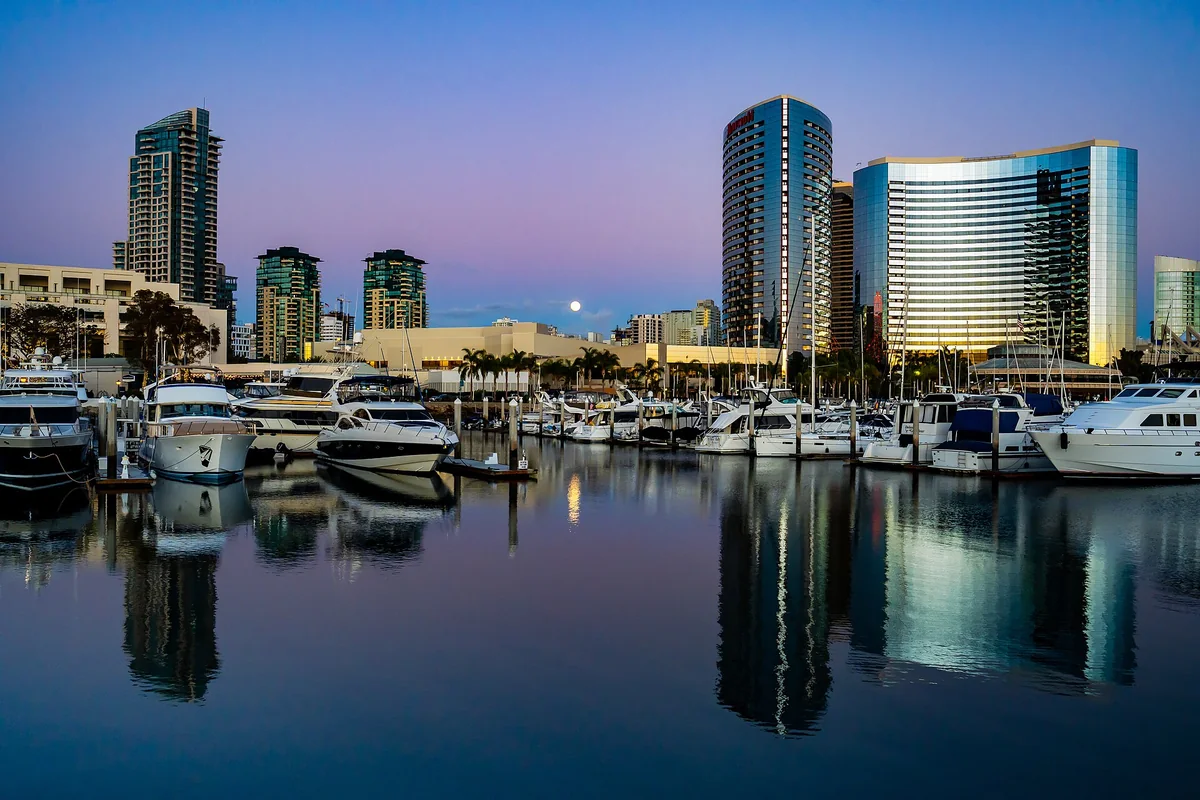
San Diego harbor tours are a way to see the bay from the water without planning an offshore wildlife trip. The main decisions are route, duration, departure location and the needs of your group. Check the operator’s current sailing details before booking; a skyline photograph does not tell you which landmarks, decks or facilities are included.
What counts as a harbor tour?
A narrated sightseeing cruise focuses on the bay and its waterfront. It differs from a dining cruise, a passenger ferry, a high-speed ride and an offshore whale-watching trip. Some operators sell several of these experiences, so read the product description rather than assuming that every boat with the same logo follows the same route.
If you mainly want an overview of the harbor, choose a sightseeing product. If the meal, speed or destination matters more, compare those specific experiences separately. The right category prevents disappointment and makes price comparisons more meaningful than placing unrelated cruises side by side.
Flagship north, south and full-bay options
Flagship’s official harbor-tour page lists north and south harbor options as well as a full-bay tour. The one-hour north and south products provide different perspectives; confirm the current route descriptions and schedule rather than assuming one is a shorter version of every other sailing.
Choose by the waterfront you most want to see and the time your group is comfortable aboard. A longer tour is not automatically a better choice for young children or someone with limited stamina. Weather, operational conditions and the assigned vessel can affect the experience, so treat the advertised route as something to confirm, not a guarantee of a particular photograph.
City Cruises sightseeing options
City Cruises’ San Diego sightseeing page provides another official starting point for harbor sightseeing. It distinguishes sightseeing from other cruise categories and describes narrated views of the waterfront. Use the exact product page linked from the current directory for duration, inclusions and check-in.
Compare like with like: a sightseeing fare should not be evaluated as though it includes a dinner, reserved dining table or offshore wildlife search. Look at the route, seating arrangements and cancellation terms before deciding. This guide does not quote a price because fares and special departures can change.
Boarding locations and arrival time
Flagship’s FAQ lists public-cruise boarding at 990 North Harbor Drive, but follow the instructions on the booking for your particular sailing. Different operators and products can use different check-in points along the Embarcadero. Do not arrive at the nearest boat and assume it is your departure.
Allow time for transport, parking, finding the dock and any required check-in. A departure time is not an arrival recommendation. Save the operator’s contact details and ticket information before leaving. If a family member is traveling separately, agree on the land-side meeting point rather than a vague place “by the harbor.”
Accessibility: ask about the exact vessel
Flagship’s FAQ explains that accessibility varies across its fleet and that a ramp-accessible main deck does not mean every upper deck or restroom is accessible. This distinction is important for wheelchairs, walkers and anyone who cannot use stairs. Ask about the assigned vessel, boarding slope, seating and restroom needs before purchasing.
Describe the requirement specifically rather than asking only whether the cruise is “accessible.” The same applies to stroller storage and assistance boarding. A general website symbol is not enough to establish that a particular deck, route or facility will work for every person. Confirm arrangements directly with the operator.
What to bring and what to check
Bring sun protection, a wind layer and a way to secure loose belongings. Bay conditions can feel cooler than the nearby street. Ask about food, drink, restrooms and outside-item policies instead of assuming a sightseeing ticket includes everything you would expect on a dining cruise.
Check the weather forecast and read the cancellation terms. A covered seating area may improve comfort, but it does not guarantee every part of the boat is sheltered or that a sailing will operate in every condition. Follow crew instructions, supervise children and use handholds when moving around.
Make the rest of the day flexible
A harbor tour pairs well with an unhurried waterfront walk, but leave a buffer before a timed meal or another reservation. Do not squeeze boarding between two commitments that make any delay stressful. If the cruise changes, a shore-side bay visit can still be worthwhile.
For a park-based alternative, see Shelter Island Shoreline Park. For trips departing farther north, compare Oceanside boat rides, which use a different harbor and can head offshore. Choose the right departure waterfront first, then the route and vessel that fit the group.
Questions before you go
Is a harbor tour the same as whale watching?
No. A harbor sightseeing tour focuses on the bay; whale-watching trips generally go offshore. Check the product description.
Are all harbor-tour decks wheelchair accessible?
No blanket claim applies. Flagship says accessibility varies by vessel and deck, so confirm the exact boarding and restroom arrangements.
Sources & further reading
Official information and references for this guide. Check the source for current access, rules and conditions.