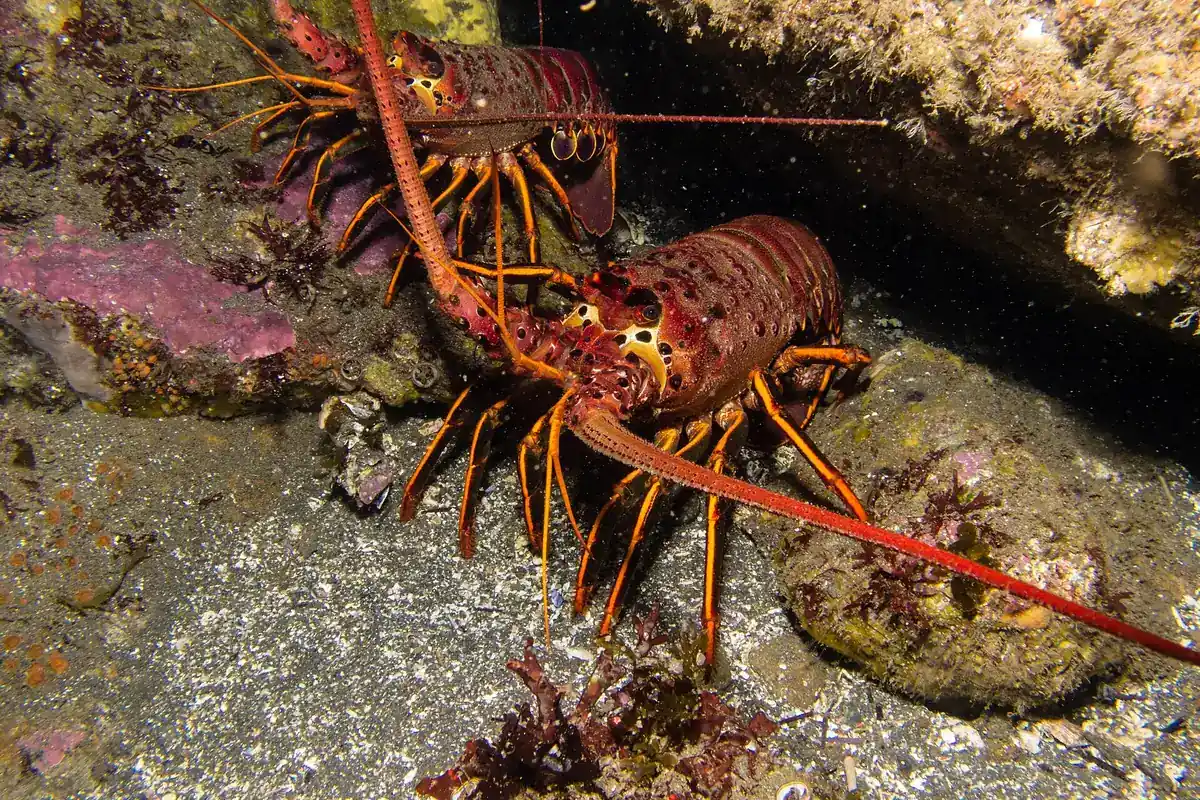
San Diego spiny lobster discussions usually involve the California spiny lobster, Panulirus interruptus, and the recreational fishery along Southern California’s coast. Whether you want to recognize the animal or try lobster fishing, start with the distinction between observing wildlife and legally taking it. A lobster visible in the water is not automatically a lobster you may catch.
What makes it a spiny lobster?
California spiny lobsters have long antennae and lack the large front claws many people associate with Atlantic lobsters. Look for a robust, segmented animal rather than assuming any small crustacean is a juvenile lobster. A photograph can help with identification, but handling wildlife is not necessary to enjoy an observation.
Keep your hands away from crevices and do not reach into habitat to pull an animal into view. Divers and shore visitors should leave animals undisturbed in protected areas. If you are visiting with children, explain that an animal’s shelter is part of its habitat, not a place to move rocks or insert a stick for a closer look.
San Diego lobster fishing starts with current rules
Use CDFW’s current Southern Region regulations and its recreational lobster information before planning a trip. The season has defined opening and closing times, not simply a general “fall through spring” permission. An old calendar entry or a tackle-shop conversation should not be the final authority.
Check the rules again close to the trip. Emergency changes, protected-area restrictions and other closures can matter even during an open season. This guide intentionally does not give a permanent opening date, price or annual schedule. Follow the state page for the season you are actually fishing, and make sure everyone in the group understands the rules before gear goes into the water.
Report cards and fishing licenses are different requirements
CDFW requires a Spiny Lobster Report Card for everyone taking spiny lobster, including people younger than 16. Do not assume a child is exempt from the card because a separate fishing-license age rule may be different. The card is part of the management system and has recording and reporting instructions that should be read before the trip.
Check the state’s guidance on fishing-license requirements and any applicable public-pier exemption for your exact circumstances. A license exemption does not erase the report-card requirement or other regulations. Fill out and submit records as directed by CDFW rather than waiting until details of the outing have been forgotten.
Size limits, bag limits and measuring
The current Southern Region page specifies a minimum carapace size and a daily bag limit. It explains measuring along the midline of the upper body from the rear edge of the eye socket to the rear edge of the carapace. This is not a tail-length measurement and should not be estimated by eye.
Before trying to keep a lobster, learn the official measurement method and carry an appropriate gauge. Understand release requirements and how to handle animals without unnecessary injury. Check the current numerical limits directly on the state page so that a saved copy of this article does not become your only regulation reference in a later season.
Legal methods and hoop-net rules
CDFW distinguishes lobster-taking methods and sets limits on hoop-net possession and use. The state also specifies buoy-marking requirements and inspection intervals for hoop nets. Gear that is sold locally is not automatically legal in every configuration or location, so check the actual rules rather than relying on the product name.
The current guidance allows divers to possess spearfishing equipment while diving for crustaceans, but that equipment may not be used to take lobster. Do not convert that distinction into permission to spear or hook a lobster. If the method is unclear, resolve the question with CDFW before fishing, not after an animal has been taken.
Spiny lobster locations and marine protected areas
This guide does not publish a list of “best spiny lobster locations.” Suitability and legality depend on protected-area boundaries, access, conditions and the method used. A familiar reef or a place where someone else is fishing can still be closed to taking lobster. Read CDFW’s maps and the rules for the specific marine protected area.
Do not treat a beach parking entrance as proof that the water offshore is open to fishing. State marine reserves and conservation areas have different restrictions, and boundaries may not be obvious from the surface. Plan a lawful location before leaving shore and avoid moving gear into unfamiliar water because the intended spot is crowded.
Night fishing, diving and a safer decision
Catching lobster in San Diego can involve darkness, boats, rough water and equipment. Those demands are separate from knowing the season and limits. Stay within your training and experience, use appropriate safety equipment and check weather and marine forecasts. Do not make a first dive, first night outing and first lobster trip all the same learning exercise.
If your interest is wildlife rather than harvest, a supervised observation outing or an aquarium visit may be a better fit. Browse the fishing guide for regulations context and the tide-pool guide for low-impact shore observation. Leave protected animals where they are and keep fishing ambitions secondary to access, legal requirements and personal safety.
Questions before you go
Do children need a lobster report card?
Yes. CDFW requires a Spiny Lobster Report Card for everyone taking spiny lobster, including children under 16.
Can you spear California spiny lobster?
No. The CDFW guidance says spearfishing equipment may not be used to take lobster. Check the current rules for all legal methods.
Sources & further reading
Official information and references for this guide. Check the source for current access, rules and conditions.