San Diego beach fishing starts with a legal location, the right license and conditions that leave room for both casting and a safe exit. An appealing stretch of sand is not automatically open to fishing. Marine protected areas, beach-use rules, temporary closures and species regulations can overlap, so check the exact shore before choosing tackle or promising a catch.
Beach, pier, bay or boat?
Shore fishing can mean casting from an open beach, standing on a qualifying public pier or fishing from a lawful bayfront access point. Each has different rules and hazards. Ocean fishing from a charter boat is a separate activity with its own operator requirements; a boat trip listing does not establish what you may do from a nearby beach.
For a first outing, favor straightforward, established access and ample space over a supposedly secret spot. Avoid a location that requires climbing a cliff, crossing a closed area or carrying gear across a tide-dependent passage. The best fishing spot for a visitor is one that is legal and manageable on that day, not necessarily the one associated with the largest photograph of a fish.
California fishing licenses and validations
CDFW's licensing information explains when a sport fishing license is required. In general, anglers 16 and older need a license for ocean shore fishing, with exceptions such as fishing from a qualifying public pier. Additional validations or report cards can apply depending on location and species. Review the official license guidance before buying.
Do not assume that every jetty, dock or structure qualifies for the public-pier exception. A license exemption also does not remove species limits, gear restrictions or protected-area rules. CDFW notes that some report-card requirements apply even to people otherwise exempt from a fishing license. Check the actual activity and target species rather than looking for one simple rule that covers everything.
Check marine protected areas before casting
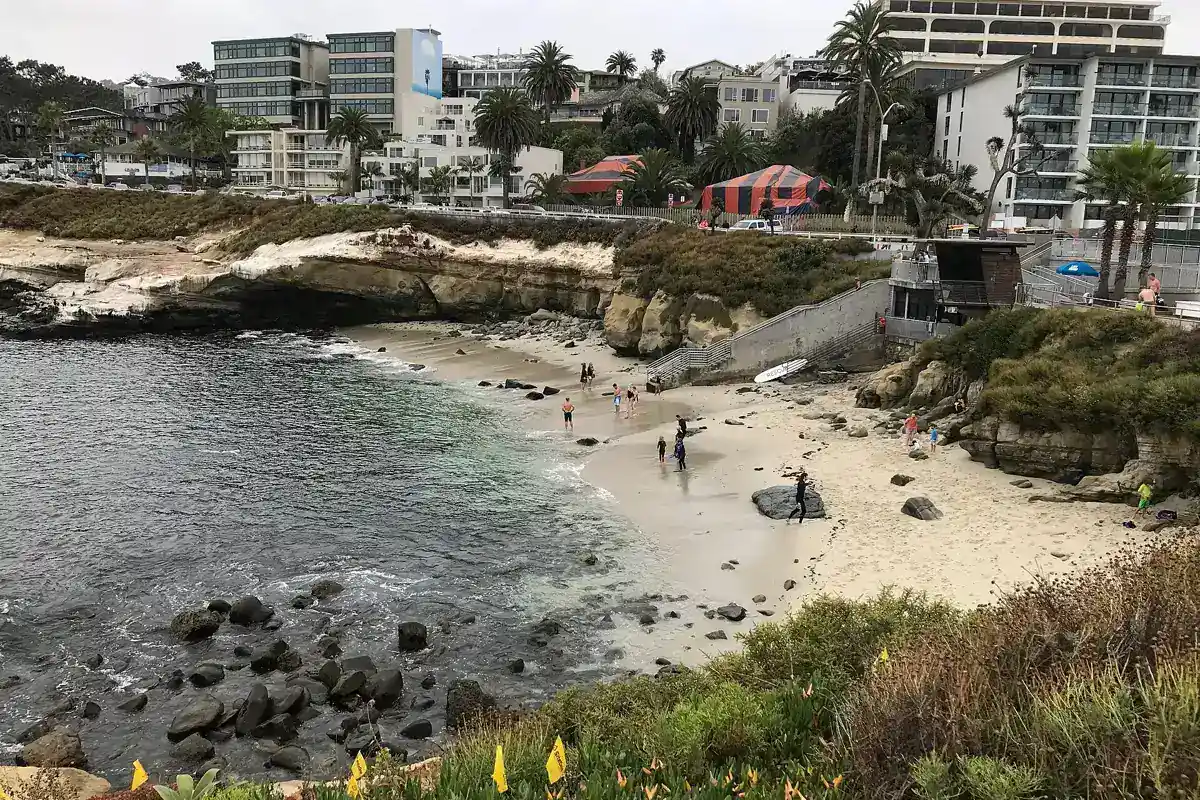
San Diego's coast includes reserves where take is prohibited and conservation areas with limited exceptions. At Matlahuayl State Marine Reserve near La Jolla, no take of marine resources is allowed. The neighboring San Diego-Scripps Coastal conservation area has specific hook-and-line exceptions for certain coastal pelagic species, not general shore-fishing permission.
Use CDFW's current map and the regulation for your exact location. A place name can cover more than one legal zone, and a boundary offshore may not be obvious from the beach. Our marine protected areas guide explains the distinction, but the official map and legal text are the sources to use when deciding whether to cast.
Choosing San Diego surf-fishing access
For an open-beach outing, identify a lawful public entrance and check local beach rules, swimming zones and lifeguard directions. California State Parks lists fishing among activities at South Carlsbad State Beach, but that does not remove license requirements, species regulations or the need to check the precise water you intend to fish.
Walk the beach before setting up. Look for room behind you and keep well clear of swimmers, surfers and people walking at the waterline. Never cast across a busy access point. Tide and surf affect both fishing conditions and the amount of usable space, so avoid planning a session that leaves you trapped between waves and a bluff.
Public piers and current closures
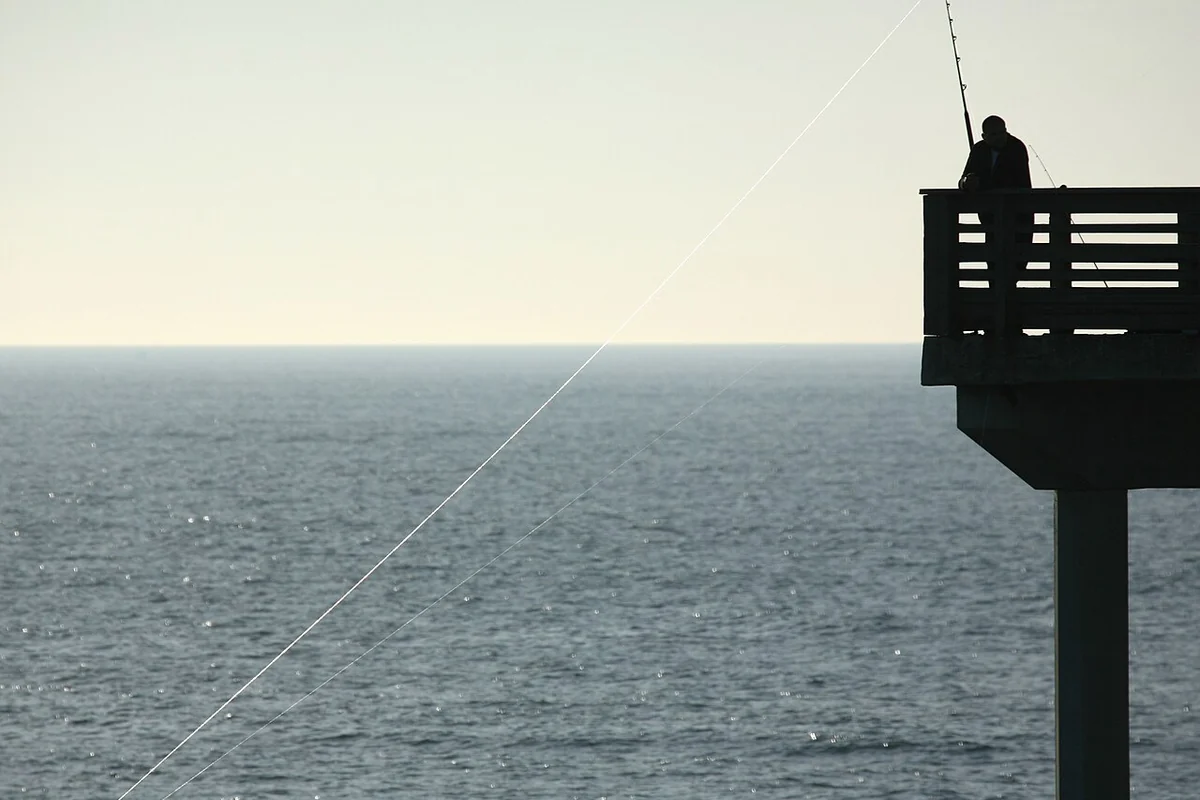
Pier fishing can offer a more defined access route, but the structure must be open and fishing must be permitted where you stand. Check the managing city's current information before making a trip. Do not infer access from an old photograph or a fishing report describing a previous season.
The City of San Diego's Ocean Beach page states that the Ocean Beach Municipal Pier is closed to the public and planned for replacement. It should not be included in an itinerary as an available fishing platform. Other piers have their own rules and conditions. Even where no license is required, you must still follow current regulations and avoid casting into people or restricted water.
Sunset Cliffs fishing is not a beginner recommendation
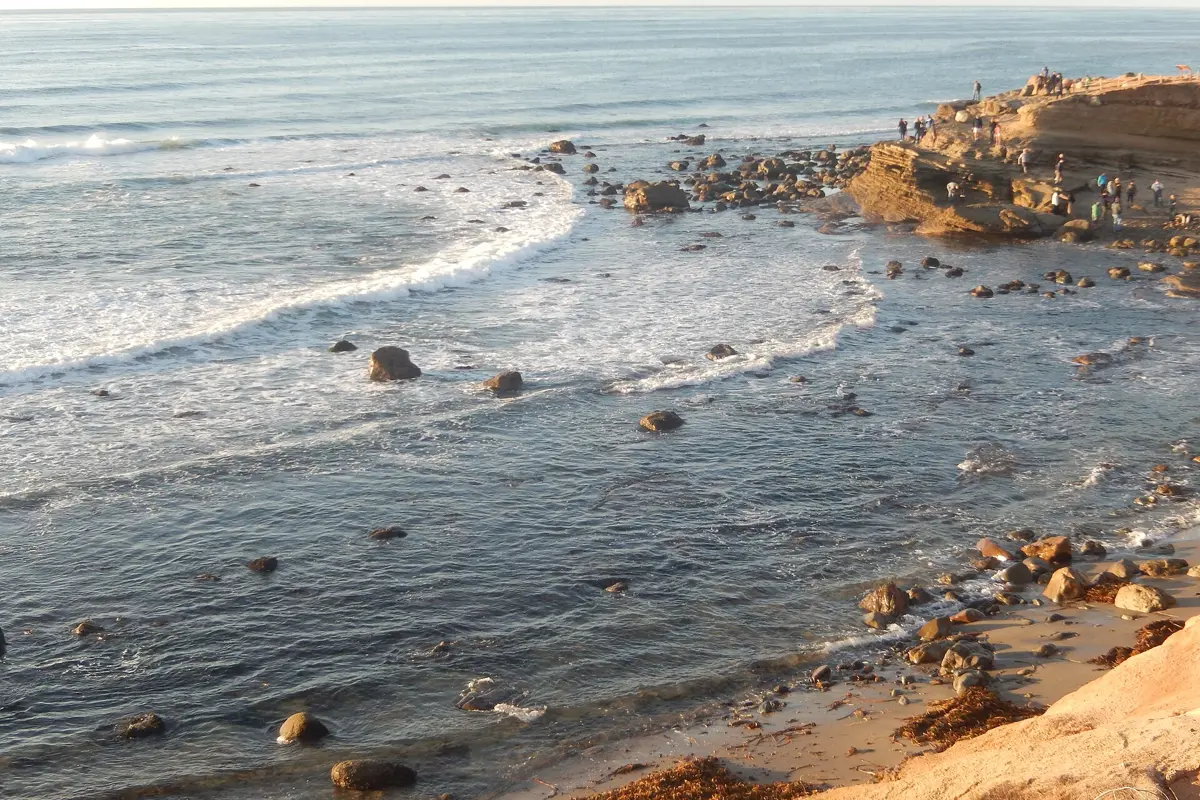
Searches for Sunset Cliffs fishing often emphasize proximity to deep water or dramatic scenery. Those qualities do not solve the access problem. We do not recommend scrambling down bluffs, standing on exposed ledges or climbing onto slippery rock to reach a supposed secret spot. A photo of someone fishing from a ledge is not evidence that the route is lawful or safe.
Choose a more straightforward shore access point if you cannot verify the route, boundary or exit. Conditions can change during a session, and carrying a rod and tackle reduces your freedom of movement. No potential catch makes an unstable cliff or wave-washed platform a good trade.
Species rules and low-impact habits
Read the current ocean sport fishing regulations for seasons, size limits, bag limits and permitted gear. Do not rely on a rule remembered from a previous year or a neighboring county. If you cannot confidently identify a fish, do not assume it is legal to keep. Ask CDFW or a qualified local source before the trip about the species you may encounter.
Pack out line, hooks, bait containers and every scrap of packaging. Keep tackle away from birds and dogs, and never leave a baited hook unattended where somebody can step on it. Take care not to disturb shorebirds feeding near the wash. A productive trip should leave the access area as usable for other people and wildlife as it was when you arrived.
A pre-trip checklist
Confirm the exact location, current access, MPA boundary, license, validations and target-species rules. Check surf, tide and weather, then decide whether there is enough safe casting space. Bring pliers, a way to measure fish if keeping a legal catch, sun protection and a container for discarded line.
Keep the first session simple and be willing to leave if the beach becomes crowded or conditions deteriorate. There are no guaranteed catches or verified secret coordinates here. The purpose is to make San Diego saltwater fishing a lawful, considerate coastal outing rather than a search for the most risky place to stand.
By 70 Miles of Coast editors.
Sources & further reading
Official information and references for this guide. Check the source for current access, rules and conditions.
- Sport Fishing Licenses and Report Cards
- Matlahuayl State Marine Reserve, and San Diego-Scripps Coastal State Marine Conservation Area
- Swami's State Marine Conservation Area, and San Elijo Lagoon State Marine Conservation Area (No-Take)
- South La Jolla State Marine Reserve/State Marine Conservation Area
- Public Piers and Jetties - R7 - CDFW [ds3090] GIS Dataset
- South Carlsbad State Beach activities and access
- City of San Diego: Ocean Beach and pier closure
- CDFW ocean sport fishing regulations