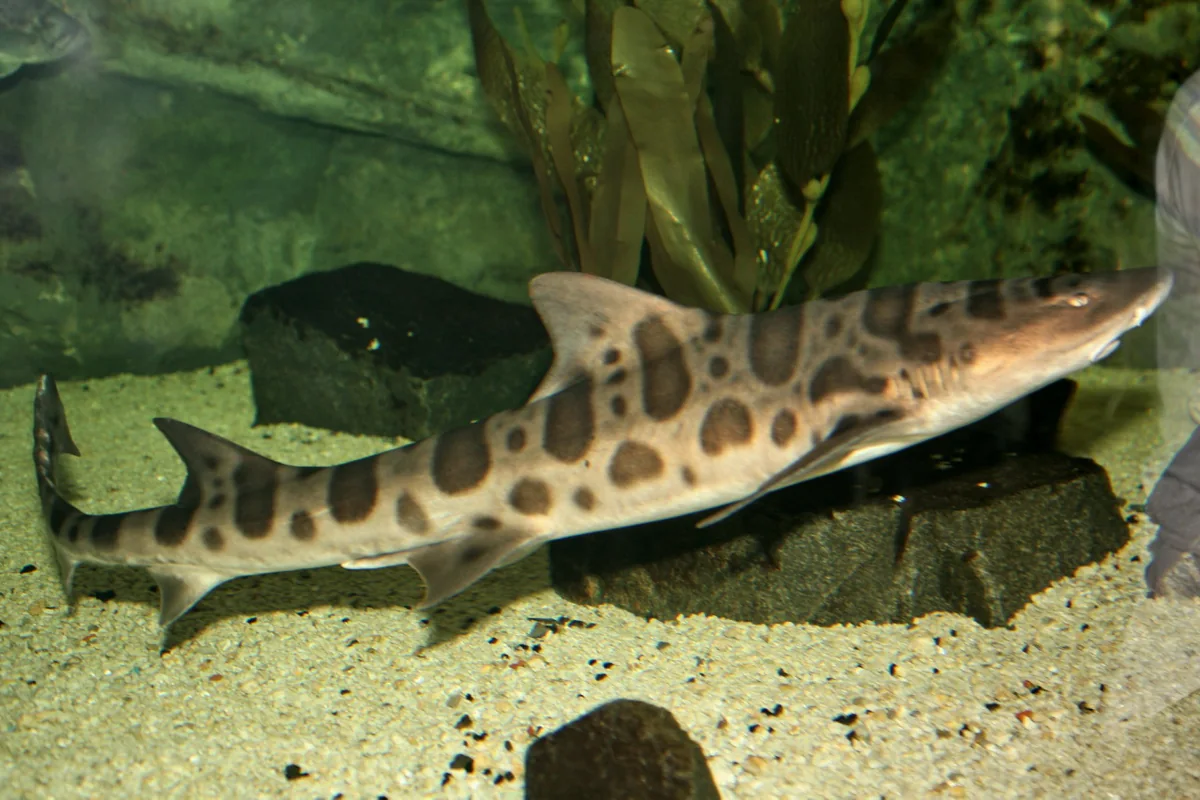
Sharks in San Diego are part of the coastal ecosystem, including species that use shallow bays and sandy nearshore habitats. A sighting is not automatically an attack warning, and an old social-media video is not a current beach advisory. For swimming decisions, follow lifeguard instructions and posted closures; use species information to understand wildlife, not to override an on-site safety direction.
Are there sharks in San Diego?
Yes. Birch Aquarium at Scripps identifies leopard sharks as among the common sharks along the California coast, especially around San Diego. California Department of Fish and Wildlife information also documents white sharks in the region’s broader coastal waters. These are different animals with different habits, not interchangeable labels for any fin.
This page is a general guide, not a live San Diego shark-sightings feed. It does not claim that a particular beach is clear of sharks or closed right now. Conditions and advisories change, and absence from a list cannot establish absence from the water. Ask lifeguards about current restrictions when you arrive.
Leopard sharks and La Jolla
Leopard sharks have a distinctive pattern of dark saddle-shaped markings and spots. Birch Aquarium describes them as local animals that are especially familiar in San Diego. CDFW’s species portal says they use shallow bays, estuaries and nearshore sandy or kelp environments, often close to the bottom.
Observe without touching, feeding, cornering or following an animal into shallow water. Do not surround sharks for photographs or let a tour description turn wildlife into a handling activity. A distant view is enough. If snorkeling, stay within your experience and the day’s water conditions rather than concentrating so closely on an animal that you lose track of shore, boats or companions.
White sharks off San Diego beaches
CDFW identifies white sharks as protected in California and explains that juveniles occur in Southern California nearshore waters. A large shark may be difficult to identify from a brief glimpse, a blurry video or a single fin. Do not turn an uncertain observation into a confident species or size claim.
If you see a shark while swimming or surfing, remain calm, leave the water in a controlled way if possible and alert lifeguards. Follow any closure or advisory, even if you see other people staying in. Do not enter the water to obtain a better view or attempt to attract an animal closer for a recording.
Types of sharks in San Diego
Birch Aquarium’s Southern California shark overview discusses leopard sharks and other regional species, including the Pacific angel shark. It is a useful educational resource because it explains differences in form and habitat rather than presenting every shark as a surface-swimming predator. A bottom-dwelling animal may look very different from the silhouette people imagine.
Use a reputable species reference to interpret photographs after the outing. Note the visible shape, markings and context without inventing details that were not observed. Avoid lifting an animal, pulling a tail or moving it onto sand for identification. If an animal appears stranded or injured, contact appropriate authorities rather than treating it as a photo opportunity.
Are there sharks in San Diego Bay?
Shallow bays and estuaries are suitable habitat for some sharks, including leopard sharks according to CDFW’s species account. San Diego Bay should not be described as shark-free simply because it is sheltered from ocean surf. Nor should a bay sighting be assumed to be a white shark.
For a bay outing, consider boating zones, water quality and supervision as well as wildlife. A calm surface can hide changing depth and other hazards unrelated to sharks. Follow the rules of the specific park or swimming location. The Shelter Island park guide, for example, explains why a pleasant bayside beach is not automatically a lifeguarded swimming site.
Are there bull sharks in San Diego?
This guide did not verify an established local bull-shark population or a current confirmed San Diego bull-shark sighting from an official species or incident source. That is different from claiming that an unusual animal could never occur. Ocean conditions and species ranges are complex, and speculation about future warm-water visitors is not a record of a present sighting.
Treat “bull shark San Diego” captions cautiously unless the original identification, date and location can be checked. Do not label a shark by behavior alone or reuse footage without tracing its source. A confident social-media caption is not a substitute for an expert identification or an official beach advisory.
A sensible response to sightings
Report a relevant observation to lifeguards with the location, approximate time and what you actually saw. Avoid crowding the shore or launching a drone over wildlife for a closer look. If someone is in immediate danger, call emergency services and provide a clear location rather than trying to investigate personally.
Keep the broader swimming-safety picture in view: use staffed beaches, obey instructions and assess surf and currents. Compare the family-beach guide for planning context, and use the sharks hub for further reading. Respecting sharks and respecting beach-safety decisions belong in the same outing.
Questions before you go
Are there sharks in San Diego?
Yes. Leopard sharks are familiar local coastal animals, and white sharks occur in Southern California waters. A sighting alone does not describe the level of risk at a particular beach.
Is this a live shark-sightings tracker?
No. This is a species-and-safety guide. Follow lifeguard instructions and official beach notices for current restrictions.
Sources & further reading
Official information and references for this guide. Check the source for current access, rules and conditions.