Long walks along the beach in San Diego are easiest to enjoy when you decide whether you mean sand underfoot, a paved waterfront route or a trail above the ocean. Those choices change the effort, the effect of the tide and the places you can leave the route. Start with a specific public access and plan the return before chasing a distance goal.
Mission Beach and Pacific Beach: the paved option
The oceanfront boardwalk between Mission Beach and Pacific Beach is a practical candidate for a longer walk without committing to soft sand. It is an urban setting with other walkers and wheeled users, not a quiet wilderness trail. Keep a steady line, leave passing room and step aside before stopping. An out-and-back lets each group choose a distance without arranging transportation at the far end.
Choose the oceanfront deliberately; the bayside is a separate shoreline. If someone plans to meet you later, name a recognizable public access and say which side you are walking. A vague “beach walk” invitation can send people to opposite sides of Mission Beach. Keep a return option in mind if the boardwalk becomes too crowded for the outing you wanted.
Carlsbad: build distance along the seawall
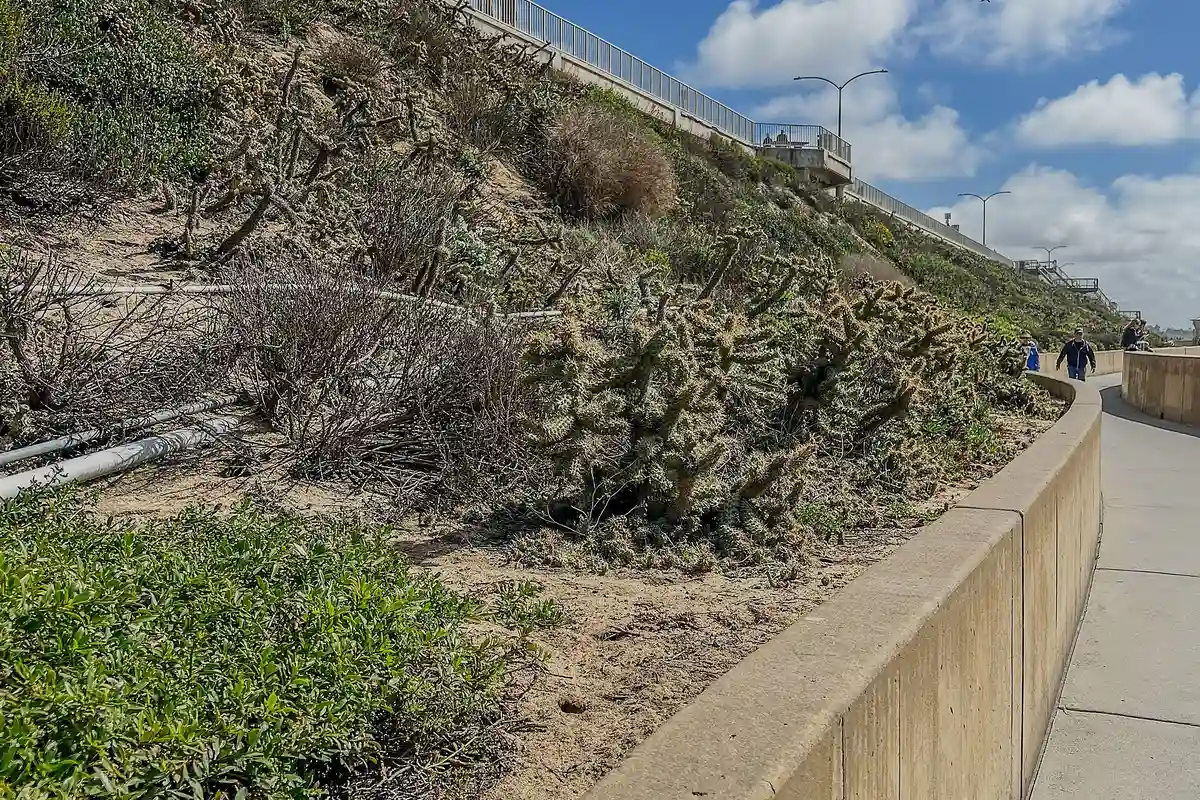
Carlsbad's waterfront offers upper and lower seawall routes between Pine and Tamarack avenues, with another seawall extending south from Tamarack toward Cannon Road. It works well for a walk with a flexible turnaround. The city lists restrooms and showers at the ends of the Pine-to-Tamarack section. If bringing a dog, the distinction matters: leashed dogs are allowed on the upper route, not the lower one.
The Carlsbad Sea Wall Trail guide covers those route choices. Do not turn a comfortable paved outing into a difficult sand return just to make a loop. Staying on the same lawful path in both directions is often the best plan. If avoiding steps is essential, verify the actual approach rather than assuming every beach access provides the same connection.
Torrey Pines: dramatic scenery, more shoreline judgment
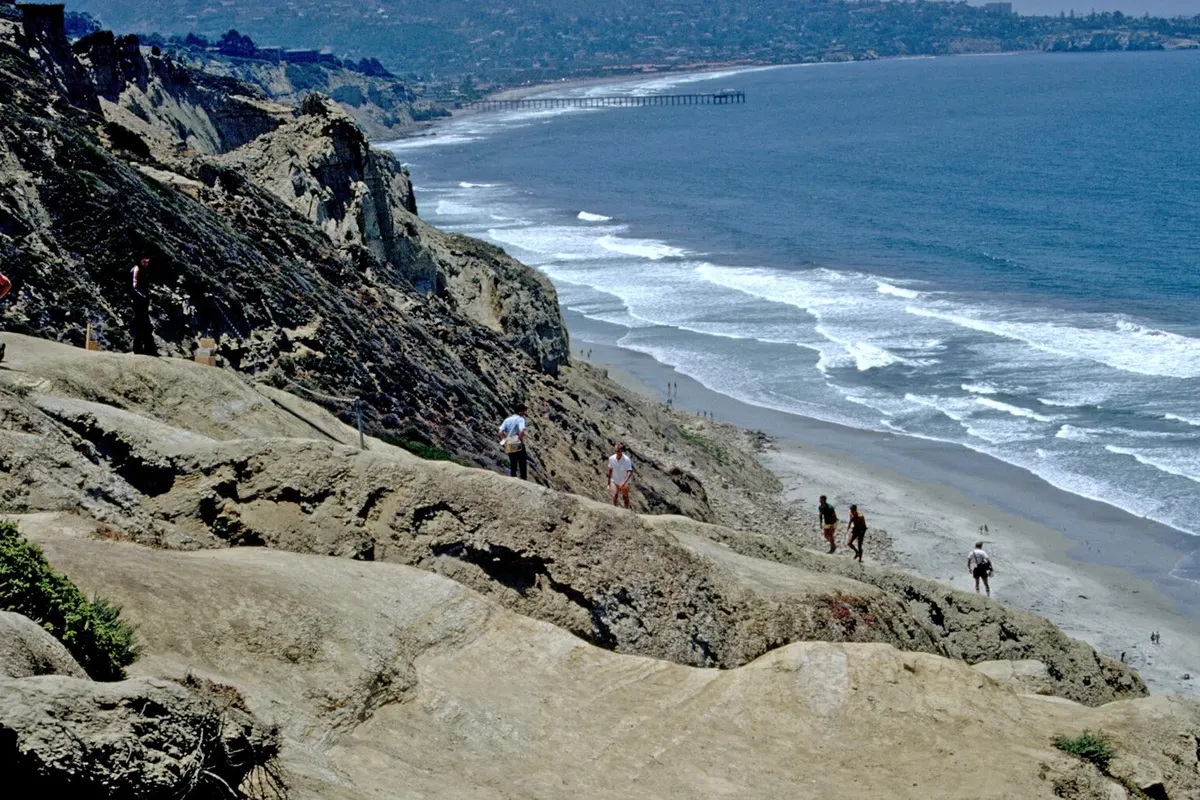
Torrey Pines State Beach offers an expansive coastal setting below sandstone bluffs, but a beach walk here needs more than a mileage plan. Use the official state beach page to choose the correct entrance and check current conditions. The beach and the natural reserve above have different route considerations; do not assume every trail connection is available.
Look at the dry-sand width, swell and tide before heading along the bluff-backed shore. Keep well clear of the cliff base and do not round a wet obstacle because the next open section looks close. A rising tide can make the return different from the outbound walk. If conditions narrow the available route, choose a shorter outing or a marked trail above instead.
Coronado and Silver Strand: choose a defined public start
Coronado and Silver Strand offer another broad coastal setting for a sand-focused outing. Use designated public beach access, and check the official information for the particular city or state beach you choose. A long coastline on a map is not a promise of uninterrupted public passage across every property or into restricted areas. Observe posted boundaries and turn around while the return remains straightforward.
For Silver Strand State Beach, use the State Parks visitor page for current parking, hours and rules. Do not assume a car-access closing time and a desired walking schedule are compatible. If your outing depends on an evening return, resolve the parking question before leaving the vehicle. A beautiful sunset is not a reason to ignore access conditions.
Sand makes the mileage feel different
Firm damp sand can feel easier than deep dry sand, but the walking surface varies with water level, slope and recent conditions. Choose footwear for your comfort and carry what you need rather than assuming every mile has facilities. A long sloping shoreline walk can feel repetitive on the ankles and knees. Turning around early is a sensible adjustment, not a failed outing.
Bring water, sun protection and a layer for wind. If you take shoes off, keep them available for rougher sections and the return through parking areas. Do not walk over unfamiliar objects or sharp debris. For a group with different abilities, choose a short shared first section and an agreed meeting point rather than letting everyone spread out without a plan.
A lower tide is useful, not a safety guarantee
A lower tide can expose additional sand, but swell and shoreline shape still matter. Never use the prediction alone to decide that a bluff-backed stretch or rocky point is safe. Observe several wave sets and use local warnings. Do not rely on a private staircase as an exit if the shoreline becomes impassable; choose routes with established public access you understand.
Check the official tide information for the relevant coast and watch the conditions on arrival. If the walk requires timing a hazardous gap between waves, choose another route. The beach trails guide offers alternatives that distinguish sand, pavement and bluff paths. The right San Diego coastal trail is the one that matches the day's conditions and the group's needs.
Make the turnaround part of the plan
Pick a time or landmark for turning back, with enough daylight for the slower return. For a one-way route, arrange the pickup first and verify a lawful endpoint. Phone reception, transport availability and tired feet are poor things to leave to chance. A long walk should finish with an uncomplicated return, not an improvised scramble to locate a beach exit or a ride.
Questions before you go
Where can I take a long paved coastal walk in San Diego?
The Mission Beach/Pacific Beach boardwalk and Carlsbad's seawall routes offer paved options. Choose a specific public start and a comfortable turnaround.
Is low tide always safe for a long beach walk?
No. Swell, cliffs, rocks, erosion and changing sand also affect the route. Do not continue where waves or terrain compromise the return.
Sources & further reading
Official information and references for this guide. Check the source for current access, rules and conditions.