Agua Hedionda Lagoon offers two different ways to get to know coastal Carlsbad: an interpretive visit at the Agua Hedionda Lagoon Foundation's Discovery Campus and a walk along one of the lagoon's public trails. They complement each other, but they are not the same destination. Decide whether your priority is exhibits, bird-watching or a shoreline stroll before choosing a map pin. The foundation now calls its visitor facility the Discovery Campus; travelers searching for the Agua Hedionda Lagoon Foundation Discovery Center are looking for that same educational starting point.
The map pin marks the lagoon, not the Discovery Campus entrance. Use 1580 Cannon Road for the campus.
Start at the Discovery Campus in Carlsbad
The campus is at 1580 Cannon Road. Its mix of hands-on exhibits, gardens and live animal ambassadors gives a lagoon visit some useful context, particularly for families with school-aged children. Rather than treating the building as a quick restroom stop before a hike, leave time to explore what the exhibits say about the watershed. A lagoon is connected to the neighborhoods and creeks upstream, not just the ocean visible on a coastal drive.
The foundation's Discovery Campus page is the place to check current opening hours, visitor arrangements and programs. Event schedules can change the character of a visit. A quiet look around and a scheduled educational activity are different experiences, so check which you are planning before arriving. Do not assume a school program, animal encounter or special event is included in an ordinary drop-in visit.
What the Agua Hedionda Lagoon Foundation does
The foundation is both an educational organization and a steward of public access and habitat. Its conservation work includes trail maintenance, restoration opportunities and fishing-line collection along the coastal Hubbs Trail. That combination is worth noticing on a walk. The paths, signs and access easements are managed spaces, not an invitation to wander anywhere that looks open.
One useful family activity is to connect something seen in an exhibit with something outside: a bird using the shoreline, a plant growing above the water, or a drain leading toward the lagoon. Keep the exercise observational. Wildlife does not need feeding, handling or pursuit to make a good nature lesson. A simple notebook with three things noticed can be more rewarding than rushing through every display.
Choose an Agua Hedionda Lagoon trail
The foundation lists approximately 3.5 miles of trails around the lagoon, including the Bayshore Drive, Cove, Hubbs, Kelly School and Discovery Campus trails. That is a network total, not a promise of a continuous 3.5-mile loop. Use the foundation's trail and conservation information to choose an access point and understand how a particular segment fits the shoreline.
For an easy first visit, pair the campus with the trail option its staff recommends for current conditions. For a walk focused on open-water views, compare the coastal trailheads on the map before leaving home. A path visible on the opposite shore may require a separate drive rather than a quick crossing. Avoid building an itinerary around an assumed connection between pieces of trail.
The Carlsbad Boulevard trailhead question
Searches for the Agua Hedionda Lagoon Carlsbad Boulevard trailhead usually come from visitors who want the coastal end of the lagoon rather than the Cannon Road campus. These are distinct starting areas. A navigation search for the nature center can take you inland even when the water view you had in mind is near the coast. Confirm the named trail on an official map instead of selecting the first lagoon result.
Before parking, read the signs for the particular access point. A visitor space for an adjacent business or facility is not automatically public trail parking. Do not use a bicycle lane or a traffic shoulder as a convenient unloading area. If the access you planned is closed or full, change the walk rather than stepping through a gate, crossing an unauthorized area or improvising a route along a busy road.
Wildlife viewing without a checklist mentality
Bird-watching is a good reason to slow down here. Bring binoculars if you have them, then watch how birds use different parts of the shoreline. An exposed edge, a patch of vegetation and open water offer different feeding and resting opportunities. You do not need to identify every species to understand that the lagoon contains several small habitats within one landscape.
Stay on designated routes and give animals room to continue what they were doing. A bird that stops feeding to watch you has already noticed your approach. Backing away makes a better observation possible. Keep snack wrappers secured and take all food scraps away. Feeding birds changes their behavior and can concentrate animals in places where people and traffic put them at risk.
Agua Hedionda Lagoon photos: what to frame
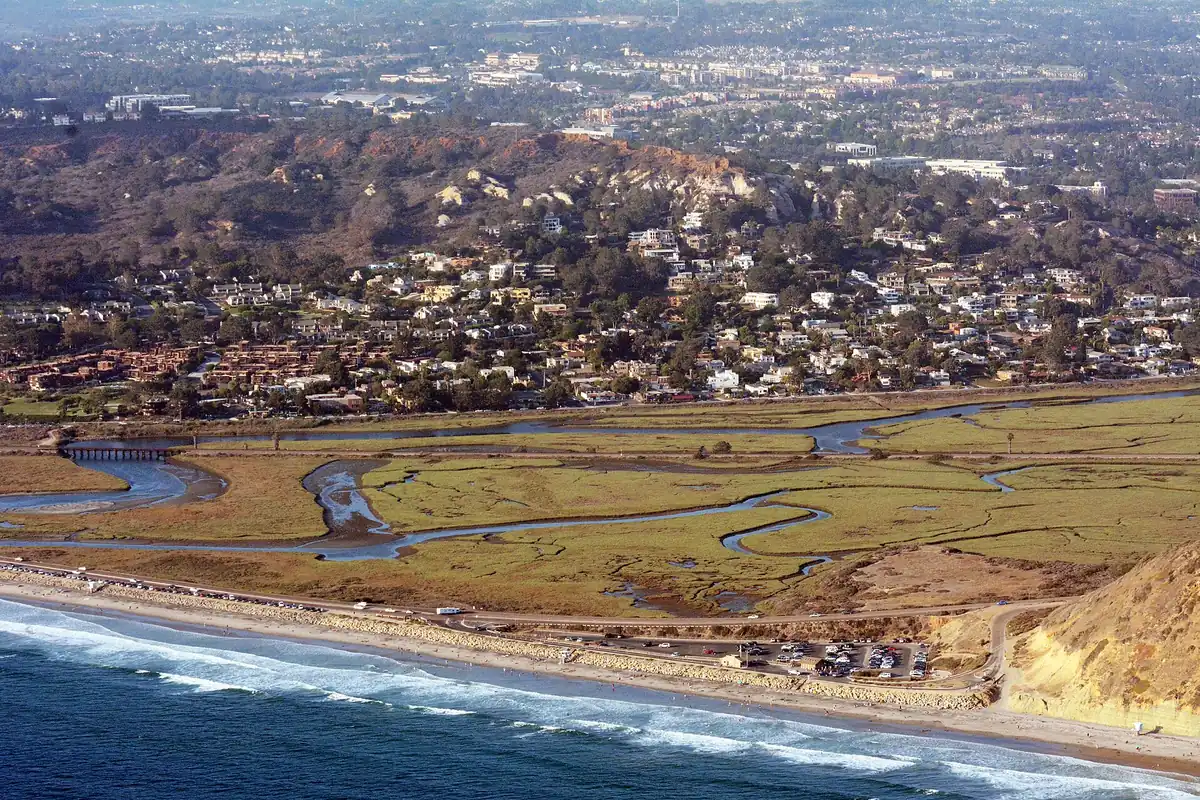
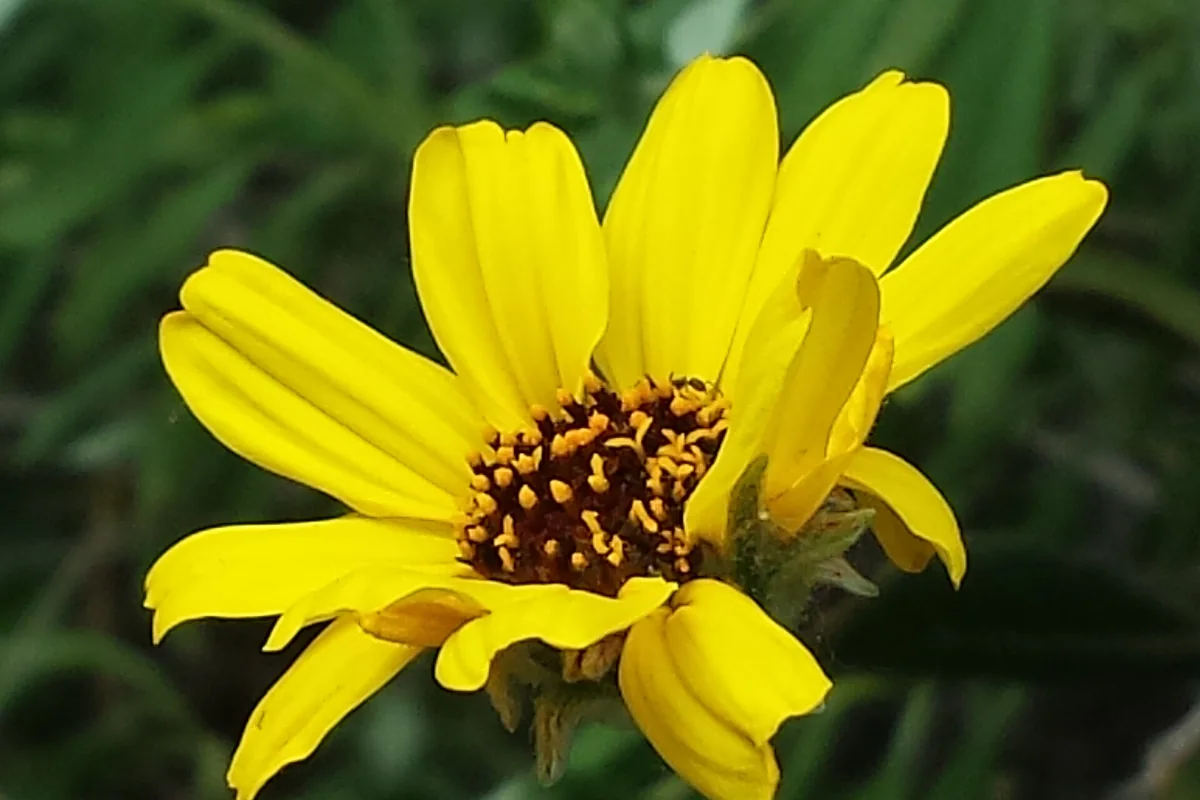
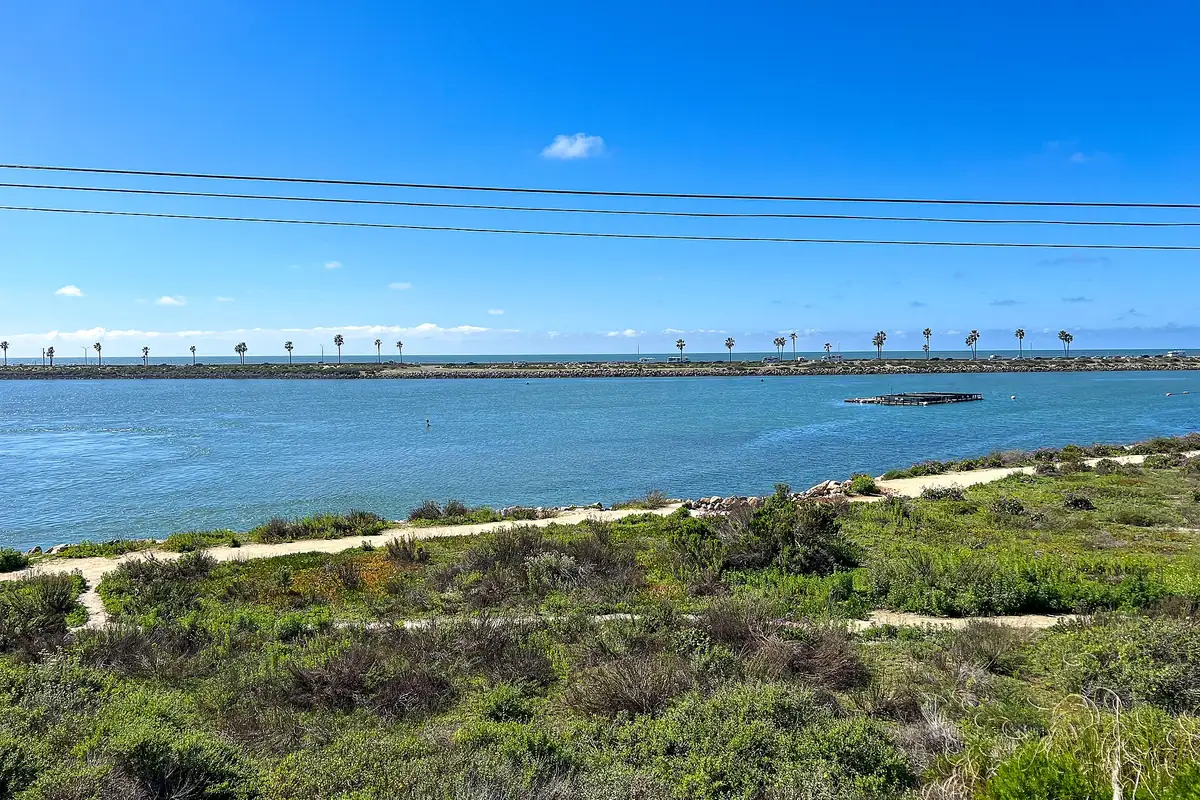
The lagoon works well as a landscape subject because water, coastal vegetation and developed Carlsbad share the scene. Try a wide view that shows those relationships, followed by a closer photograph of an identifiable plant or an interpretive detail. A photograph does not need an empty horizon to communicate the character of this place. Infrastructure is part of the watershed story, too.
For Discovery Center photos, ask about any photography restrictions near programs or animal presentations. Avoid flash around animals unless staff specifically allows it. On a narrow trail, step aside only where there is a durable, permitted space; do not flatten plants for a lower camera angle. A longer focal length is useful for wildlife because it lets the subject remain undisturbed.
Agua Hedionda Creek and the watershed
The lagoon's educational value extends beyond its immediate shoreline. Looking upstream helps explain why runoff, litter and landscaping choices matter at the coast. The foundation frames its work around the environment, watershed and local community. Keep that broader picture in mind when you encounter the name Agua Hedionda Creek: a creek search is not necessarily a direction to a visitor entrance or a walkable route beside the water.
If your main interest is geology, water quality or habitat restoration, start with the foundation's educational materials rather than trying to read everything from the appearance of the water on one day. A single photograph cannot establish ecosystem health. Likewise, a pleasant-looking surface is not evidence that swimming, paddling or fishing is permitted at a particular location.
Practical planning before you leave
Bring drinking water, sun protection and shoes suited to the trail you choose. Match your plan to the slowest walker and consider how far you will need to retrace your route. Check separate rules for pets, recreation and access rather than assuming every part of the lagoon shares one policy. This guide does not promise boating access or permission to enter the water.
For mobility needs, contact the campus about the exact route from parking to the exhibits you want to visit. A nature center and a nearby unpaved path can have very different surfaces. Ask about grades, door access, seating and accessible restrooms rather than relying on a general label. Having an indoor or garden-focused plan is useful if a trail is unsuitable.
Make it a Carlsbad nature outing
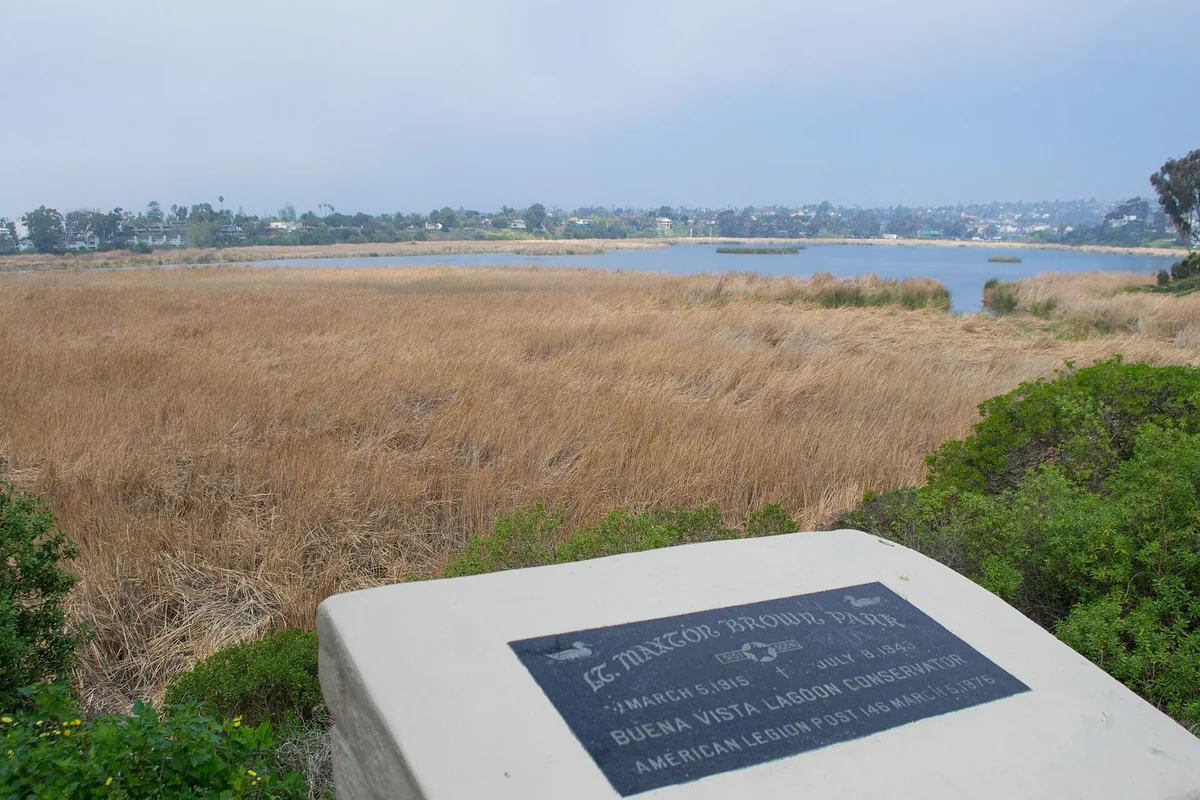
Keep your first visit simple: campus orientation, one selected trail, then time to compare notes. Trying to drive between every access point can leave less time for the lagoon itself. If your group wants another wetland outing on a different day, the Buena Vista Lagoon nature center and short trail offers a useful comparison farther north.
To pair the lagoon with other stops nearby, see things to do in Carlsbad. You can also browse the San Diego birding guide for other observation-focused trips. The most valuable thing to take away from Agua Hedionda is not a completed mileage target. It is a clearer sense of how coastal water, upstream land and everyday public access fit together, plus a reason to return to the same trail and notice what has changed.
Sources & further reading
Official information and references for this guide. Check the source for current access, rules and conditions.