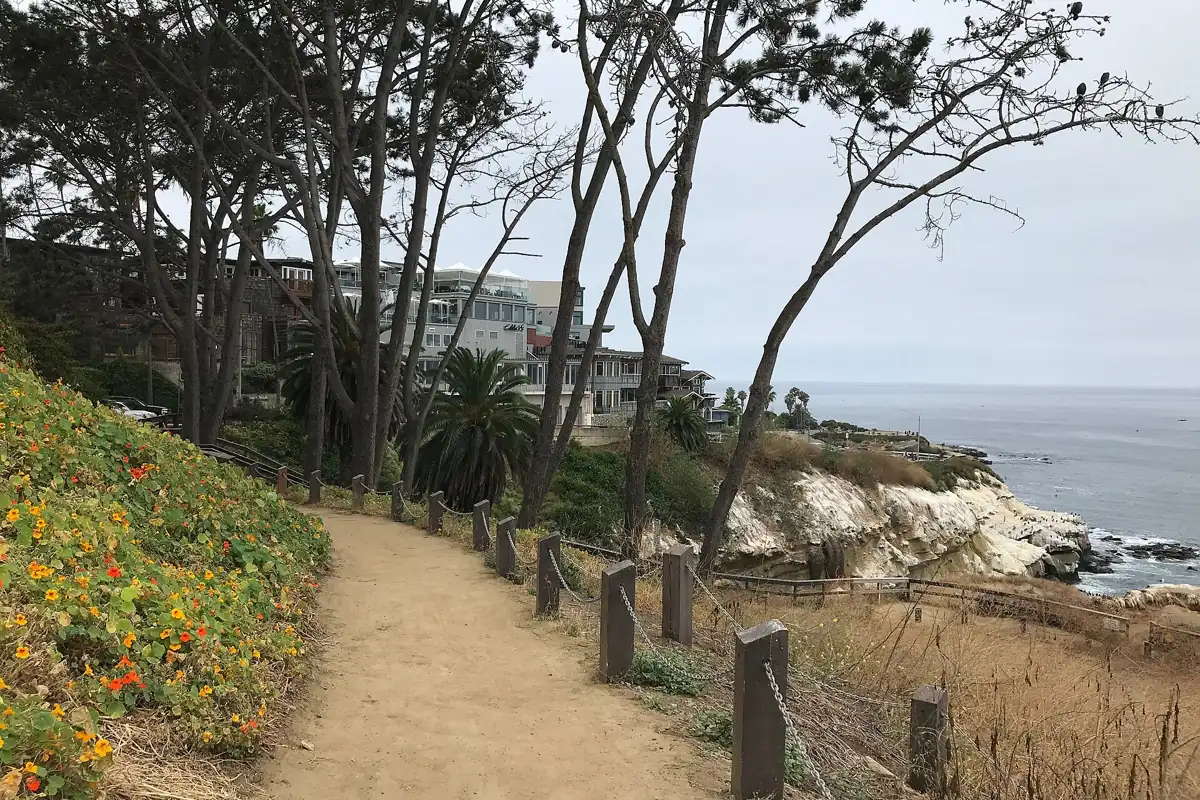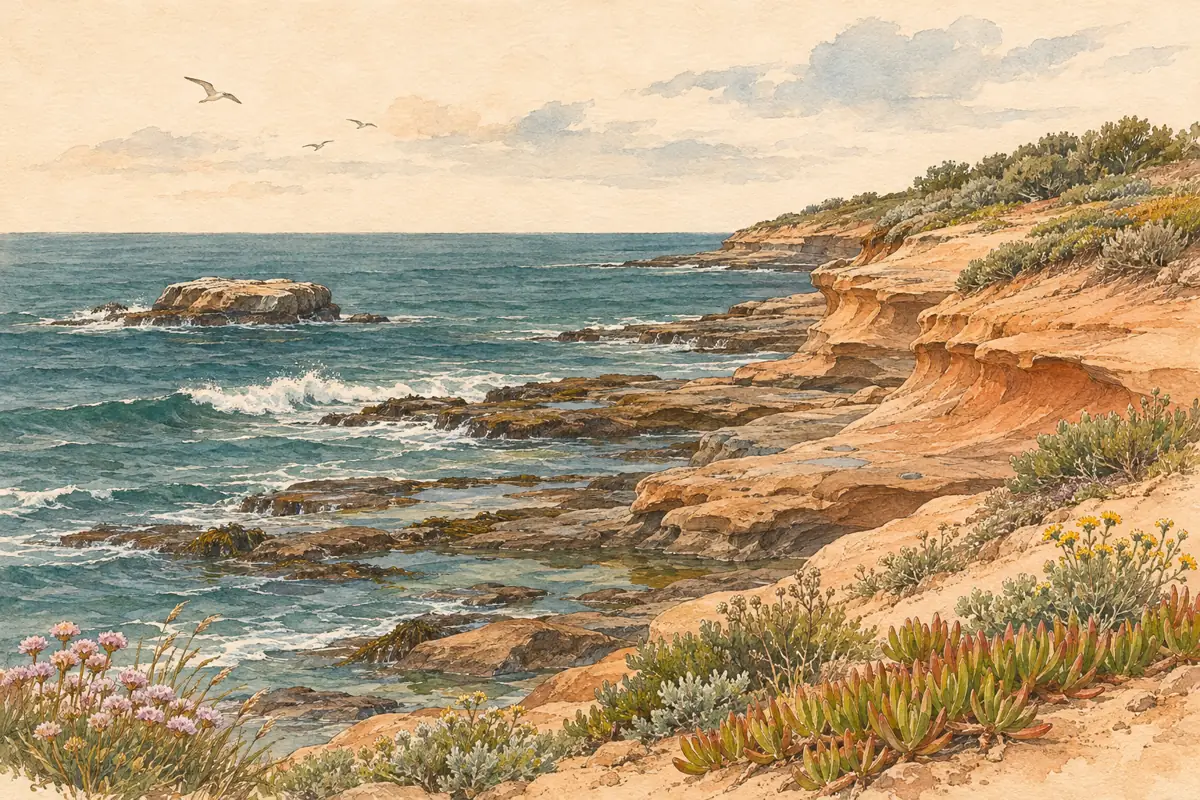
Bird Rock Beach San Diego is a useful search term for a complicated stretch of coast: a La Jolla neighborhood, rocky shoreline, public viewpoints and reef surf spots share the Bird Rock name. Do not expect a broad sandy beach with a full set of visitor facilities. This is a place to assess from above before deciding whether any shore-level exploring makes sense.
The San Diego Tourism Authority describes the coast from Bird Rock toward Pacific Beach as cliffs and rocky shore with limited access. Its guidance also notes the lack of lifeguards and facilities along the reefs. For an easy swimming day or a beach trip with small children, another beach is usually the more practical choice.
Where is Bird Rock in San Diego?
Bird Rock is in the southern part of La Jolla, north of Pacific Beach. La Jolla Boulevard is the main neighborhood corridor. Ocean-facing residential streets lead toward small viewpoints and public approaches, but the streets do not all provide access to the shoreline.
Be careful with similarly named destinations. Bird Rock in La Jolla is not a Laguna Beach location. “Birdrock Beach,” “North Bird Rock Beach” and “Bird Rock surf” may also describe different parts of the same local reef coast rather than a single marked entrance with a parking lot.
Start by choosing your purpose: a park picnic, a short coastal view, tide-pool observation or a surf session. Then identify the actual public access for that activity. Simply navigating to the neighborhood label can put you in the wrong place and encourage unnecessary wandering through residential driveways.
Bird Rock Beach access
The Tourism Authority identifies Bird Rock Avenue as an approach to this section of coast and describes stairs at its seaward end. Access does not mean the shore will be usable when you arrive. Water level, swell and erosion can change what is exposed and whether a safe return is possible.
Use posted public routes only. Do not climb around a closed stairway or follow tracks down an eroding slope. If the route is closed or the shore is being washed by waves, keep the visit at a public viewpoint. There is no need to reach the water for the outing to count.
Read parking signs on each block, keep driveways clear and avoid turning narrow residential approaches into waiting areas. This guide does not promise a dedicated parking lot, restroom or accessible beach ramp at Bird Rock. If one of those is essential, plan a different beach with verified amenities.
Calumet Park and the Bird Rock park question
Calumet Park is the officially documented ocean-view park in this part of Bird Rock. The City of San Diego describes it as a small residential-neighborhood park overlooking the surfing area called Rock Pile. The city's directions use Midway Street and Calumet Avenue.
A park overlook and a beach access are different things. Come to Calumet for a coastal pause, not because you assume lawn space means an easy descent to sand. It can be a better fit than the rocks for someone who wants a view without negotiating a tide-dependent shoreline.
If your map search says only “Bird Rock Park,” verify the actual destination rather than assuming every park label refers to Calumet or to a sandy beach. For events, ceremonies or organized use, consult the city's Calumet page and permit guidance. This visitor guide does not establish whether a group activity is allowed.
Bird Rock tide pools: choose conditions, not just a time
Reef and rocky-intertidal areas are part of the attraction here, but a low tide alone does not guarantee a safe outing. A powerful swell can wash across exposed rock even when the tide prediction is favorable. Check both the tide and surf forecast, then assess what waves are actually doing before going farther.
Watch from a safe, established place for a while before entering a shore-level area. Look for water crossing the route you would use to return. Do not cross a wet channel on the assumption it will stay shallow, and never make an offshore rock your destination simply because someone else is standing on it.
Keep tide-pool viewing non-extractive. Watch animals where they are, keep shoes off living clusters and avoid turning rocks or lifting creatures for photographs. Many tide-pool animals depend on a very small patch of habitat. The tide-pool guide explains how to choose a suitable outing and reduce disturbance.
Bird Rock surfing and why it is not a beginner beach
Bird Rock surf spots break over reef and rock rather than a uniform sandy bottom. The Tourism Authority identifies this stretch as a reef-surfing coast. A neighborhood surf reputation is not an assurance of forgiving conditions, and “Bird Rock surf spot” is not one standardized launch point.
New surfers should choose an appropriate lesson setting elsewhere rather than treating a rocky access as a shortcut to less crowded waves. Rocks, changing water depth, other water users and the difficulty of getting back out all matter. Tide recommendations from a casual surf description are not a substitute for local assessment and current conditions.
For anyone watching from land, stay well back from wave-washed platforms. Photographing surfers does not require standing where the largest set can reach. Long lenses and patient observation give a better margin of safety than trying to get one step closer to the break.
Who will enjoy this coast most?
Bird Rock is a good match for people who enjoy looking closely at a rugged shore: bird watchers, photographers working from public access areas and walkers adding a coastal pause to a neighborhood visit. It is a poor match for a group that expects a broad towel area, easy water entry and facilities within a few steps.
With children, choose the viewpoint-first version. Explain that the rock and water are interesting precisely because the ocean moves around them; they are not a climbing course. Keep a backup outing ready so that turning around does not feel like a failed day.
Mobility needs deserve the same advance planning. Stairs and uneven rock should not be described as accessible just because they are public. Check the specific park or access point with its manager if you need reliable information about surfaces, grades or step-free routes.
A practical Bird Rock visit
- Pick a named public viewpoint or access, not only a neighborhood map pin.
- Check the water-quality, tide and weather resources before leaving.
- Park legally and walk without blocking residential access.
- Assess the coast from above before deciding whether to descend.
- Stay at the park or turn back if the sea, access or footing is unsuitable.
Bring sun protection, water and shoes suitable for walking. If you plan to stay through sunset, make the return route a daylight decision rather than trying to discover it in the dark. A short, safe visit is preferable to stretching the outing until an incoming tide removes your options.
Nearby alternatives and how to choose
Use the San Diego beaches guide when your priority is swimming, facilities or easier sand access. Use the Coast Walk Trail guide when you want a different La Jolla bluff-top walk. Neither alternative should be treated as a continuous shore-level route from Bird Rock.
The most useful way to understand Bird Rock is as a coastal neighborhood with a rugged ocean edge. Go for the view and the character of the shore. Let conditions decide whether anything more is sensible, and leave claims about guaranteed tide pools, easy swimming or dependable parking out of the plan.
Sources & further reading
Official information and references for this guide. Check the source for current access, rules and conditions.