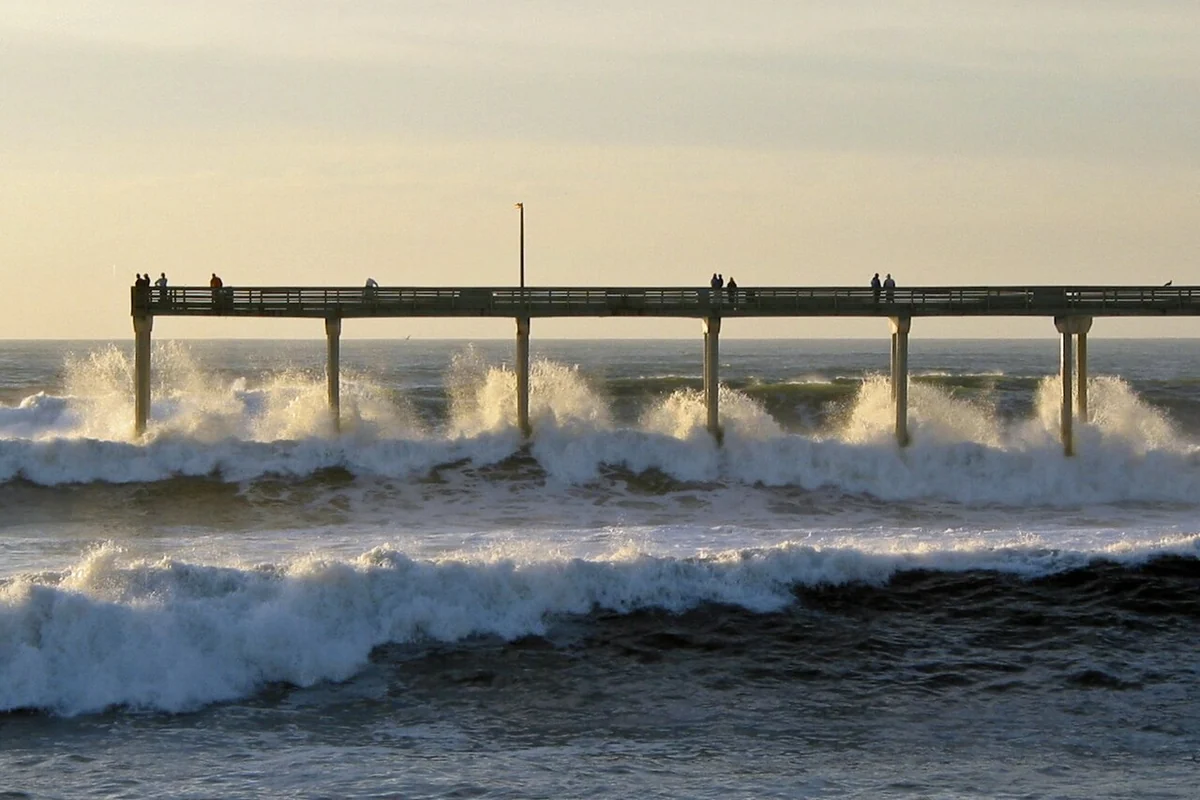
Big waves San Diego January searches often begin with dramatic winter photographs, but a date on the calendar does not predict the next large swell. January can bring powerful surf and storm-related coastal hazards. Check the current National Weather Service forecast and local access notices before choosing a beach, and treat wave watching as a land-based activity with a generous safety margin.
The same event can produce impressive views, dangerous rip currents, wave run-up, flooding and erosion. A crowded overlook or a social-media clip does not establish that a place is safe. If your usual beach has little dry sand or waves crossing its access, choose another plan.
Why winter waves deserve attention
Ocean swell can arrive from storms far from the beach. Local blue sky is therefore not proof of gentle conditions. The relevant forecast includes the coast's surf and hazard information, not just the temperature and chance of rain over your parking place.
January storm coverage and local geology reporting document the combination of strong surf, loss of beach sand and bluff erosion along San Diego's coast. Those processes can change the space available for a walk. An outing that was easy during a calmer month may have no safe route along the same shore during a winter event.
Big surf and king tides are not the same thing
Tides describe the changing background water level; waves and swell describe moving wave energy. An unusually high tide can make the effects of large waves reach farther up a shore, but a king-tide date alone does not tell you the wave height. Check both the tide prediction and the surf forecast.
Likewise, a low-tide time is not a safety clearance. Powerful sets can still cross rock platforms or run far up sand. Use the coastal resources page to find the official tools, then compare them with what you actually see from a safe position.
Quiet intervals do not make wave-washed ground safe
The National Weather Service warns that larger waves can follow deceptively quiet periods. It describes the danger of people being drawn too close during small waves and then caught by a much larger surge. The practical lesson is simple: do not use a lull to walk onto a rock, seawall or low beach section that waves can reach.
Stay well back from the water, keep watching it and leave room to retreat without climbing or crossing traffic. Do not stand where a photograph shows the last wave breaking and assume that is the maximum reach. The biggest set you will encounter may not have arrived yet.
Choosing a safer place to watch
Prefer an established public viewing area that remains well outside wave wash and away from unstable bluff edges. Avoid jetties, wet rocks, cliff bases, closed piers and improvised descents. If waves are crossing the access route or officials have closed an area, that site is not a wave-watching destination for the day.
Do not recommend one beach as universally safe during “big waves.” Conditions differ by swell direction, tide and the shape of the coast. A location that looks protected in one event can be hazardous in another. Let the forecast, closures and lifeguard guidance determine whether an outing is sensible.
Bluffs and winter erosion
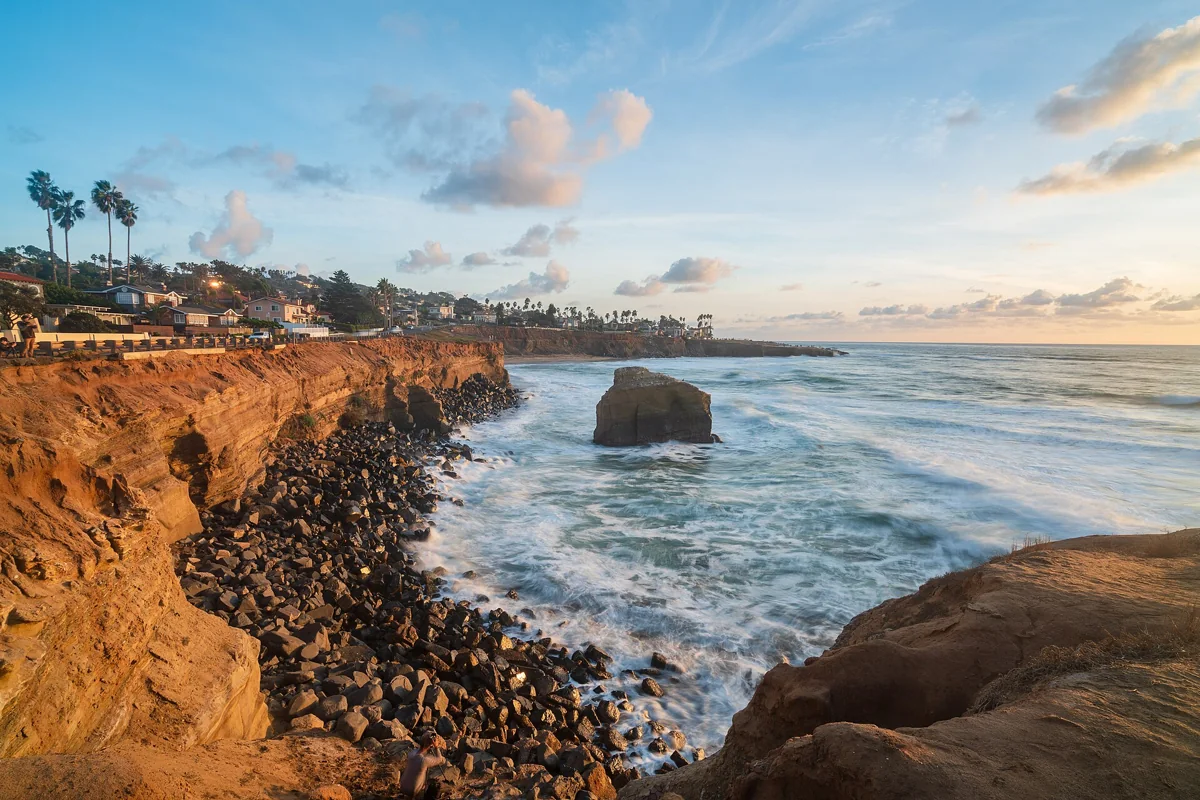
Water can remove protective sand and strike the base of a bluff, while erosion and weathering affect the cliff itself. Local geological reporting emphasizes the risk of collapse during combinations of high water and storm surf. Stay away from both the bottom and the outer edge of cliffs.
Do not interpret an unbroken surface or footprints as proof of stability. A person posing on an overhang has not tested the ground for everyone else. Choose a view that works from within the established public area, and use a longer lens instead of moving closer.
Children, dogs and photographers
Keep children close and explain boundaries before reaching the overlook. A wave-watching trip is not a chance to play tag with the water. Follow the site's pet rules and avoid places where a dog could pull someone toward an edge or into wave wash.
Photographers should set up where equipment will not block a retreat or a public path. Keep attention on conditions between shots. If someone is swept into the water, call emergency services and alert lifeguards; do not create a second emergency by entering hazardous surf without training and equipment.
What to check on the day
- National Weather Service San Diego surf and coastal-hazard information.
- Current tide predictions for the relevant part of the coast.
- City, park and lifeguard access notices.
- Weather, daylight and a safe parking-to-viewpoint route.
- A backup plan away from the coast if conditions are unsuitable.
For a quieter evening when conditions permit, compare our sunset places. Big winter surf is interesting to observe, but no photograph is worth stepping into an area that the ocean, erosion or an official closure has made unsafe.
Sources & further reading
Official information and references for this guide. Check the source for current access, rules and conditions.